Today’s post is especially important for those who have already mastered Russian grammar for beginners and would like to move on enhancing it. We are going to learn all types of the Russian reflexive verbs.
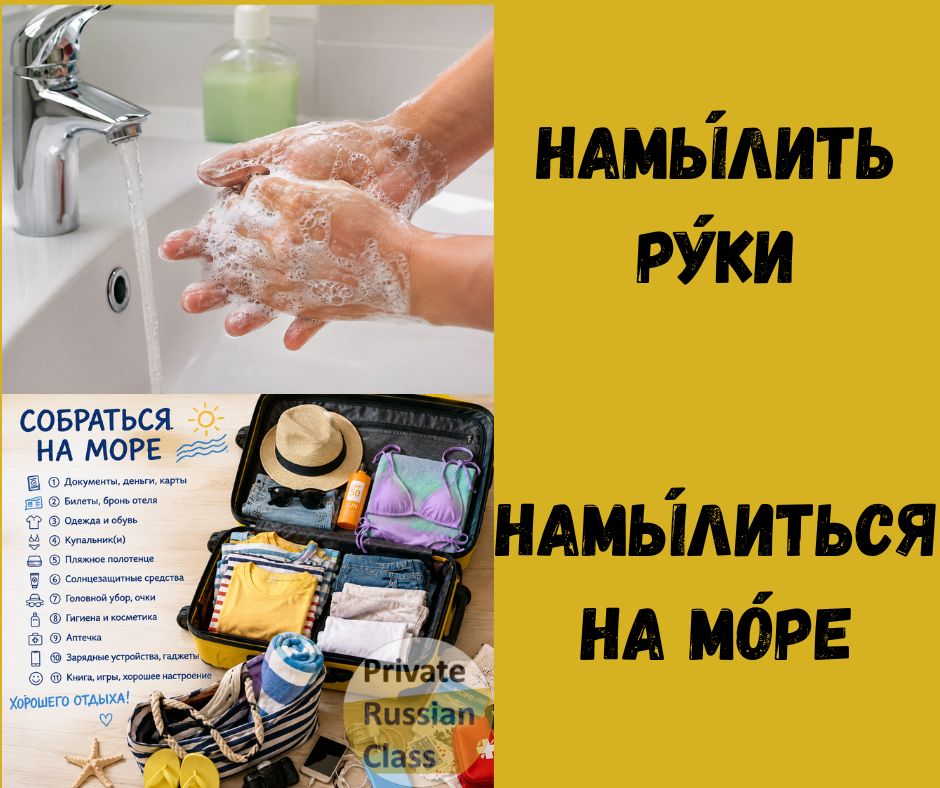
First, let’s look at how to form a reflexive verb. In the Russian language, we just need to add a suffix ся/сь to the end:
We can divide all reflexive verbs into six groups:
properly returnable;
reciprocal returnable;
generally returnable;
indirect returnable;
passive;
non-objective returnable.
Properly returnable
The action is directed at itself. Object and subject are the same figure. Я брею ноги, I shave my legs. Here the verb брить is non-reflexive, because we have a subject Я and an object НОГИ. Let’s compare: я бреюсь, I shave (myself). Бриться is a reflexive verb, since the subject is shaving itself=object. Some other verbs that belong to this group:
Imperf.
Perf.
Imperf.
Perf.
красить
накрасить
to paint, to dye
краситься
накраситься
to put on makeup
расчёсывать
расчесать
to comb someone
расчёсываться
расчесаться
to comb yourself
одевать
одеть
to dress someone
одеваться
одеться
to get dressed
обувать
обуть
to put on shoes on someone
обуваться
обуться
to put on shoes on yourself
вытирать
вытереть
to wipe, to dry off smth.
вытираться
вытереться
to dry off yourself
Мама сначала одела ребёнка, потом оделась сама, и они пошли в детский сад.
The mother first dressed the child, then dressed herself, and they went to the kindergarten.
У меня очень короткая стрижка, поэтому я не расчёсываюсь.
I have very short hair, so I don’t comb it.
Reciprocal returnable
It is a mutual action of at least two people directed at each other. Я встретил друга на улице, I met (saw / bumped into) my friend in the street. That meeting is not planned. But: Мы с другом встретились в кафе, I met my friend at the cafe. And here we have an arranged meeting of two friends.
Imperf.
Perf.
Imperf.
Perf.
целовать
поцеловать
to kiss someone
целоваться
поцеловаться
to kiss each other
мирить
помирить
to reconcile
мириться
помириться
to make up
обниматься
обнять
to hug someone
обниматься
обняться
to hug each other
ссорить
поссорить
to set someone against someone
ссориться
поссориться
to argue with other
Перед сном родители поцеловали ребёнка и пожелали ему спокойной ночи.
Before going to bed, parents kissed their child and wished him good night.
Брачующиеся обменялись кольцами и поцеловались.
The newlyweds exchanged rings and kissed each other.
Generally returnable
They express the internal state of the subject, closed within the subject itself, or a change in the state, position, or movement. Его рассердил коллега, his colleague made him angry. But: Он рассердился, когда прочитал имейл, he got angry, when he had read the email.
Imperf.
Perf.
Imperf.
Perf.
тревожить
потревожить
to disturb someone
тревожитьca
потревожиться
to worry
радовать
порадовать
to please someone
радоваться
порадоваться
to be happy
поворачивать
повернуть
to turn
поворачиваться
повернуться
to turn
Я спрятала подарок под подушку.
I hid the gift under the pillow.
Дети играли в прятки, и один мальчик спрятался за деревом.
The children were playing hide-and-seek and one boy hid behind a tree.
Indirect returnable
They denote an action performed by the subject in his own interests, for himself. Работник магазина спаковал продукты, the shop assistant has packed some food. But: Я спаковалась и уже еду на вокзал, I have packed everything, and already on my way to the railway station.
Imperf.
Perf.
Imperf.
Perf.
запасать
запасти
to stock smth.
запасаться
запастись
to stock up
защищать
защитить
to protect / defend
защищаться
защититься
to protect / defend
отказывать
отказать
to refuse
отказываться
отказаться
to refuse, to give up
Ему отказали в работе.
He was refused a job.
Он отказался от кофе на месяц, и его самочувствие улучшилось.
He gave up coffee for a month and his health improved.
Passive
The action is directed at an object or person that is the subject, but the subject itself is passive. It doesn’t produce any action, but experiences it on itself. Ты пишешь статью, you are writing an article. But: Статья пишется (тобой) с большим трудом, the article is being written (by you) with big difficulty.
Imperf.
Perf.
Imperf.
Perf.
читать
прочитать
to read
читаться
прочитаться
to be read
строить
построить
to build
строиться
построиться
to be built
шить
сшить
to sew
шиться
сшиться
to be sewed
Пиццайоло готовит пиццу.
A pizzaiolo is cooking pizza.
Пицца готовится обычно 30 минут.
Pizza is normally being cooked for 30 minutes.
Non-objective returnable
These verbs express active but objectless action, which is a characteristic feature, while retaining the property of the subject. После интенсивного бега она часто задыхается, she is often out of breath after intensive running. The form задыхать doesn’t exist. This group almost always has only imperfective verbs.
кусать
кусаться
to bite
бодать
бодаться
to butt
колоть
колоться
to prick
Родственники приехали копать картошку.
Relatives came to dig up potatoes.
Она везде и всегда опаздывает, потому что утром слишком долго копается перед зеркалом.
She is always late everywhere because she spends too much time in front of the mirror in the morning.
So, today we have covered a very serious grammar topic. If you feel that you’d like to learn more about it or enhance your Russian grammar, please look here.